


Henry Ford, Hitler, and the Industrial Influence Behind Nazi Germany
- Dec 15, 2025
- 4 min read
Updated: Mar 27
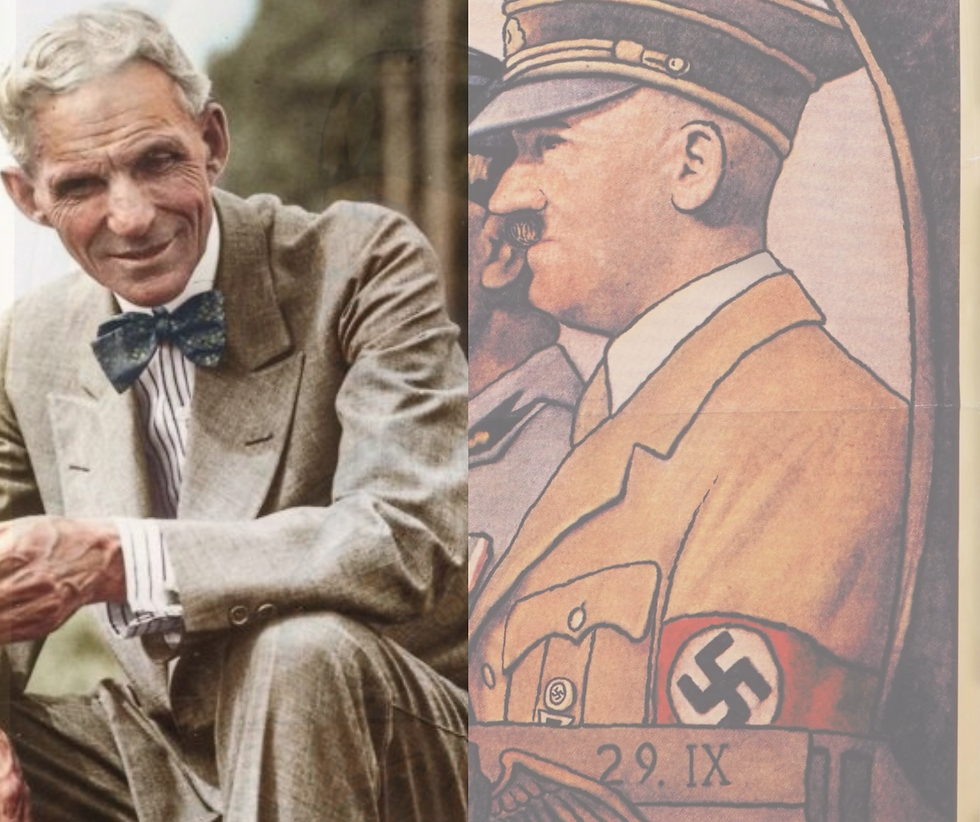
Henry Ford, Hitler, and the Industrial Roots of the Nazi Regime
Henry Ford is one of the most consequential figures in modern industrial history. His innovations in mass production transformed manufacturing around the world and made automobiles affordable for millions. However, his legacy is deeply complicated. Ford was also a vocal antisemite whose ideas and business operations had significant, documented influence on Adolf Hitler and elements of Nazi Germany, both ideologically and industrially.
A Legacy of Innovation and Prejudice
Ford’s industrial achievements are undeniable. By perfecting the moving assembly line at the Ford Motor Company, he dramatically reduced the cost and time required to build cars, laying the groundwork for twentieth-century mass production and shaping economies globally. But alongside this story of innovation was a much darker thread: Ford’s use of his influence to spread antisemitic ideas in the years after World War I.
Beginning in 1920, Ford used his own newspaper, The Dearborn Independent, to publish a series of antisemitic articles accusing Jewish people of manipulating global finance, politics, and culture. These articles were later collected into a set of pamphlets titled The International Jew, which were distributed widely in the United States and internationally. The material drew on conspiratorial sources such as The Protocols of the Elders of Zion, a fabricated text purporting to reveal a global Jewish plot,an influence that gave these false theories legitimacy among sympathetic audiences abroad. Wikipedia+1
Although Ford publicly apologized in 1927 and shut down the newspaper after a libel lawsuit, The International Jew had already circulated broadly and was translated into multiple languages, including German. Its distribution coincided with rising nationalist and fascist movements in Europe, providing ammunition to extremists who sought explanations for postwar social and economic instability. Wikipedia

Hitler’s Admiration and Ideological Influence
Adolf Hitler was one of the European leaders who openly admired Henry Ford. Hitler praised Ford in Mein Kampf and was known to keep a portrait of him in his Munich office. Ford’s success and his antisemitic rhetoric made him, in Hitler’s eyes, a model of leadership and industrial achievement compatible with National Socialist ideology. Wikipedia
Nazi figures such as Baldur von Schirach later acknowledged that The International Jew had influenced their antisemitic views, crediting Ford’s reputation as a successful industrialist with giving weight to the pamphlets’ ideas. Wikipedia In 1938, Ford was awarded the Grand Cross of the German Eagle, the highest honor Nazi Germany could bestow on a foreign civilian, a symbolic recognition of this esteem. Academia
This ideological connection did not imply that Ford dictated Nazi policy, but it did demonstrate how his public stances and prestige were co-opted by the regime to legitimize antisemitic and nationalist narratives.
Fordism and Industrial Influence in Germany
Beyond ideology, Ford’s industrial methods had a practical impact on German industry in the interwar period. The principles of mass production that Ford perfected, standardization, moving assembly lines, and economies of scale, became models for efficiency that German industrial planners admired and adopted. Academic research shows that Nazi engineers and industrial managers studied Ford’s techniques as part of efforts to modernize and expand German manufacturing. zeithistorische-forschungen.de
This influence was not limited to abstract admiration. German industry looked to American factories as blueprints for its own production systems. In some cases, Nazi engineers participated in knowledge exchange with Ford-influenced experts, and German industrial organizations used Ford-style rationalization in rearmament projects. zeithistorische-forschungen.de
These industrial systems still influence how machines are valued and sold today.
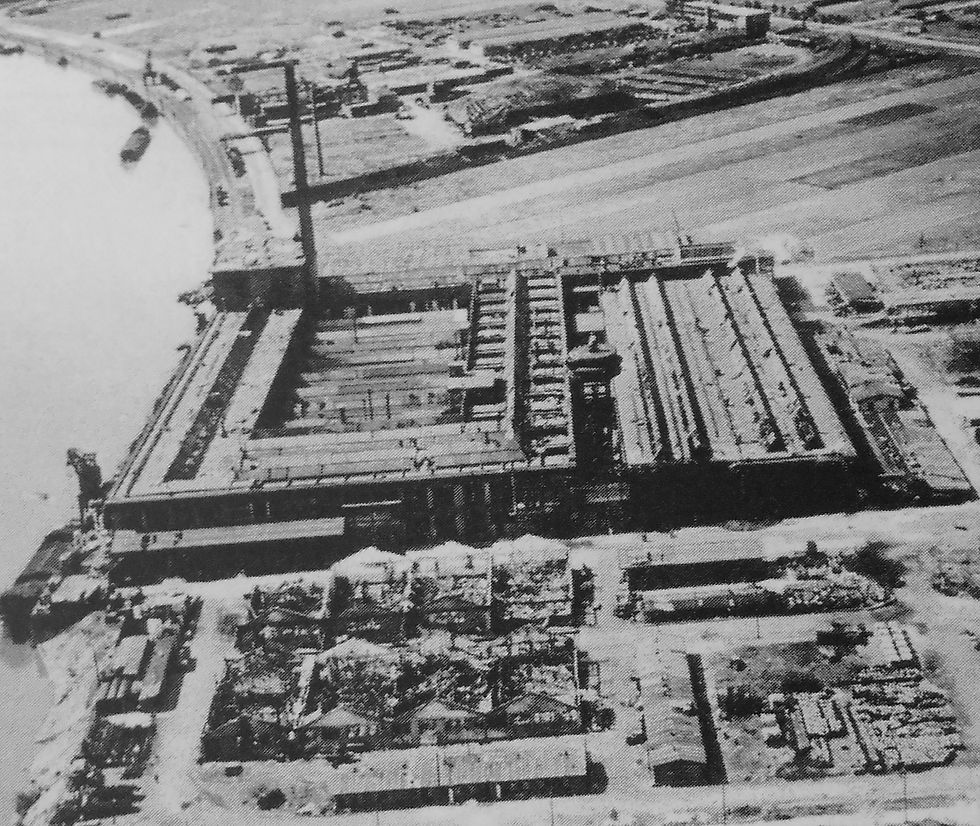
Ford-Werke and World War II
Henry Ford’s industrial footprint in Germany was not merely ideological. The Ford Motor Company’s German subsidiary, Ford-Werke, operated a major automobile plant in Cologne during the Nazi era. Like many foreign-owned companies in Germany at the time, Ford-Werke found itself caught in the tightening grip of wartime economics.
During World War II, Ford-Werke produced vehicles for the German armed forces and, as historical records show, used forced laborers in its factories under Nazi policies that conscripted civilian and prisoner labor for war production. Wikipedia+1 After the war, legal scrutiny and historical investigation confirmed that the plant had employed coercive labor practices and manufactured equipment that supported the German war effort. Wikipedia
While Ford Motor Company’s headquarters in the United States lost direct operational control over Ford-Werke after the U.S. entered the war in 1941, ownership ties remained, and the subsidiary’s wartime output significantly increased as civilian production shifted toward military and state contracts. Wikipedia
Historical Debate and Moral Complexity
Historians continue to debate the nature and significance of the connections between Henry Ford and Nazi Germany. Some argue that his antisemitism and business dealings contributed materially to the spread of extremist ideas and the industrial capacity of the regime; others emphasize that Ford was not a Nazi operative and had limited direct control over his foreign subsidiaries during wartime. zeithistorische-forschungen.de+1
What is clear is that Ford’s ideas, both industrial and ideological, were adopted and amplified in ways he may not have fully anticipated, with lasting consequences. His story illustrates how industrial success and cultural influence do not insulate innovators from moral scrutiny, especially when their ideas intersect with violent and exclusionary political movements.
What This Means for Modern Manufacturing and CNC Equipment
The industrial systems developed in the early 20th century, from mass production to global supply chains, still shape modern manufacturing today.
In today’s CNC-driven environment, machine value is no longer just about production, it’s about demand, efficiency, and how equipment fits into current market needs.
If you own CNC equipment, understanding how your machine fits into today’s market is critical.
A Complicated Legacy
Henry Ford’s transformation of manufacturing forever changed industry, yet his legacy is inseparable from his troubling influence on antisemitic thought and the ways in which elements of his reputation were absorbed by Nazi Germany. His case remains a potent reminder that technological innovation and moral responsibility must be evaluated together, especially when the reach of influence crosses borders and eras.
Industrial history shows how production, efficiency, and demand shape value.
👉 Today, the same principles apply to CNC equipment -- start with a real market-based valuation →
